
Home » ISO 9001: Complete Guide to Implementing and Certifying Your QMS [2026]
Quality Management
ISO 9001: A Complete Guide to Implementing and Certifying Your QMS [2026]
Implement a Quality Management System (QMS) aligned with ISO 9001 with clarity, method, and a focus on results. In this comprehensive guide, you will learn how to structure your QMS from the ground up, interpret the standard’s requirements, and transform guidelines into operational processes that truly work in day-to-day operations.
More than just meeting certification requirements, the purpose of ISO 9001 is to organize your company’s management to reduce errors, increase predictability, and support continuous improvement based on data. Here, you’ll find a practical path to move away from a reactive operation and evolve toward a structured, auditable, and performance-oriented model .
What is ISO 9001?
ISO 9001 is an international standard that defines the requirements for implementing a Quality Management System (QMS), enabling companies to standardize their processes, ensure consistency in their deliverables, and promote continuous improvement based on data.
The acronym ISO stands for International Organization for Standardization. ISO 9001 is part of the ISO 9000 family of standards, but they serve different purposes. ISO 9000 serves as the theoretical and terminological foundation for ISO 9001.
The scope of ISO 9001 extends to the organization of a company’s operations so that quality management shifts from a reactive approach to a structured one, linking strategy, processes, and results
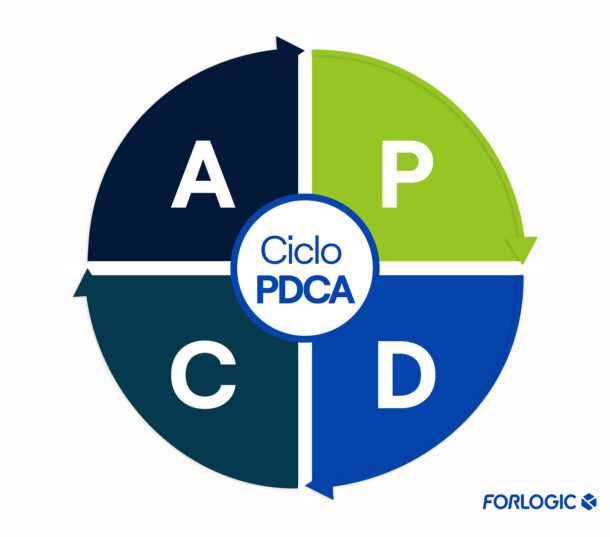
This process follows the PDCA (Plan, Do, Check, Act), the foundation of ISO 9001. You structure the processes, monitor and measure results, and work toward continuous improvement.
01.
Streamline your company's processes
Map, standardize, and document how the organization’s operations work.
02.
Monitor and measure quality
Define metrics, track results, and make data-driven decisions.
03.
Practice continuous improvement
Address nonconformities, reduce errors, and systematically improve your processes.
In this special episode of Qualicast, Jeison Arenhart —CEO of ForLogic—and Monise Carla —Director of Customer Experience at ForLogic—delve into the role of ISO 9001.
What is the purpose of the ISO 9001 standard?
The ISO 9001 standard is designed to transform the way quality is managed within a company, moving away from a reactive model based on ad hoc corrections toward a structured, predictable, and data-driven system.
This means streamlining processes, reducing errors, improving the consistency of deliveries, and ensuring that decisions are made based on evidence, not on perception.
The ISO 9001 standard establishes an operational framework that supports growth through control, efficiency, and continuous improvement. And, of course, it delivers greater value and satisfaction to those who really matter: the customers!
What are the principles of ISO 9001?
ISO 9001 is based on seven principles that guide how quality should be managed within organizations. These principles serve as the foundation for structuring processes, making decisions, and consistently promoting continuous improvement.
The seven principles guide how the company is organized, interacts with customers, and evolves its operations over time.
Gain a deep understanding of customer needs, expectations, and perceptions to ensure consistent delivery of value that truly matters. This involves monitoring satisfaction, addressing feedback, and continuously refining processes.
Establish clear direction, purpose, and organizational alignment. Leadership is responsible for creating an environment where quality is a priority, ensuring resources, engagement, and accountability at all levels.
Involve employees as active participants in the system, fostering autonomy, accountability, and continuous improvement. Skilled and engaged employees enhance process consistency and the quality of deliverables.
Manage activities as interconnected processes, with defined inputs, outputs, responsible parties, and metrics. This enables greater control, predictability, and operational efficiency.
Seek continuous improvement in processes, products, and services based on data analysis, learning, and error correction. Improvement is no longer a one-time event but becomes an integral part of day-to-day operations.
Use data, metrics, and analysis to guide decisions, reducing subjectivity and increasing accuracy. This ensures more effective actions that are aligned with the expected results.
Build and maintain strong relationships with stakeholders, such as suppliers, partners, and customers. Effective management of these relationships contributes to the system’s stability, quality, and performance.
What are the requirements of ISO 9001?
ISO 9001 establishes a set of requirements that provide guidance on how a Quality Management System should be structured, implemented, and continuously improved. The main requirements of ISO 9001 are: Organizational Context, Leadership, Planning, Support, Operations, Performance Evaluation, and Improvement.
They define what needs to be implemented in practice to ensure consistency, control, and compliance with the standard.
These requirements organize the company’s operations around processes, data, and continuous improvement, creating a system that can be audited, measured, and improved over time.
Context
Define the company’s environment, stakeholders, and the scope of the QMS.
Leadership
Ensure leadership, accountability, and a commitment to quality.
Planning
Identify risks and opportunities, and establish quality objectives.
Support
Ensure adequate resources, expertise, and information management.
Operation
Execute processes with care, ensuring consistent delivery.
Performance evaluation
Monitor indicators, conduct audits, and analyze results.
Improvement
Address nonconformities and promote the continuous improvement of the system.
Benefits of ISO 9001: What Are They?
The benefits of ISO 9001 range from enhancing brand reputation and customer satisfaction to optimizing work processes within your company.
By implementing a Quality Management System (QMS), a company in any industry can operate with greater control, predictability, and consistency, reducing errors, improving processes, and making data-driven decisions.
Of course, you also need your employees to be committed to quality. As the saying attributed to Henry Ford goes:“Quality means doing the right thing when no one is looking.”
One thing we always emphasize here at ForLogic is that ISO 9001 is very important, but quality goes far beyond that. We recorded a special episode of Qualicast with expert André Dytz on this topic.
The main benefits of ISO 9001 are:
- Standardization and operational efficiency: Well-defined processes reduce variability, increase productivity, and prevent rework.
- Reducing defects and nonconformities: Identifying root causes allows problems to be corrected permanently, preventing them from recurring.
- Structured continuous improvement: The company begins to evolve systematically, based on data, metrics, and analysis.
- Data-driven decision-making: Metrics and continuous monitoring lead to more reliable and accurate decisions.
- Increased customer satisfaction: More consistent deliveries that meet expectations build greater trust and loyalty.
- Greater market competitiveness: ISO 9001 certification strengthens a company’s image and can give it a competitive edge in negotiations.
- Preparing for sustainable growth: With streamlined processes and operational control, the company can scale more confidently.
What is the current status of ISO 9001 in Brazil?
In 2023, ForLogic conducted a survey of more than 2,600 quality professionals in Brazil. The survey consisted of approximately 80 questions, and we received responses from across the country.
First of all, we asked respondents whether the company they worked for held any certifications. We found that 68.2% of respondents worked at a company with some form of certification. This is a highly significant figure.
Based on this, we sought to understand which certifications were most common among these companies, and the results showed that ISO 9001 was by far the most prevalent, accounting for 43% of the responses.
Keep in mind that this was a multiple-choice question. Therefore, respondents could select multiple certifications, giving us a broad overview, particularly regarding the relevance of ISO standards in Brazil.

The 2023 “Quality Landscape” survey, produced by ForLogic, provides a range of statistics on the state of quality in Brazil. It is an important study for benchmarking and gaining insights into quality in general.
ISO 9001 Certification: How to Implement It?
ISO 9001 certification involves establishing a Quality Management System (QMS) that meets the standard’s requirements and is tailored to the company’s specific circumstances.
In addition to meeting audit requirements, the goal is to streamline processes, ensure control, and establish a solid foundation for continuous improvement, which directly impacts product and service quality.
This process involves diagnosis, process definition, risk management, document control, monitoring of indicators, and preparation for audits.
Although there is a structured process, the challenge lies in linking all these steps in a consistent manner without creating red tape or operational overhead.
Step 1 - Initial Assessment
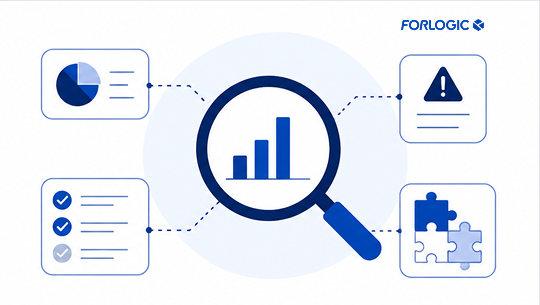
The initial assessment involves understanding how the operation actually works today, going beyond what is documented or planned.
This involves mapping existing processes, identifying how activities are carried out on a day-to-day basis, and comparing this situation with the requirements of ISO 9001 certification, thereby highlighting gaps and areas for improvement.
It is also important to assess the level of formalization within the company, determining whether responsibilities, controls, and workflows are structured or rely on informal knowledge.
Another critical issue is identifying operational risks and weaknesses, such as rework, recurring failures, or a lack of standardization, as well as analyzing available metrics to understand what is already being monitored and where there is still a lack of visibility.
Finally, the assessment should take into account the organization’s context, including stakeholders, customer requirements, and internal and external factors that impact quality.
Step 2 - Strategic Planning
Before establishing processes or creating documents, the implementation of ISO 9001 begins with a clear direction: how the Quality Management System will align with the company’s strategy.
This phase defines the scope of the system, identifies which areas and processes will be covered, and lays the groundwork for management practices that are aligned with the realities of the business.
It also involves understanding the organization’s context, internal and external factors that impact quality, and identifying stakeholders, such as customers, suppliers, and other relevant parties.
This is where the company’s quality policy and the goals it aims to achieve are defined.
When done right, this step prevents rework, cuts through red tape, and focuses efforts on what really makes a difference.
When ignored, the result is often a system that is disconnected from day-to-day operations, designed solely for auditing purposes, and with low adoption in daily practice.
Step 3.1 - Process mapping and standardization
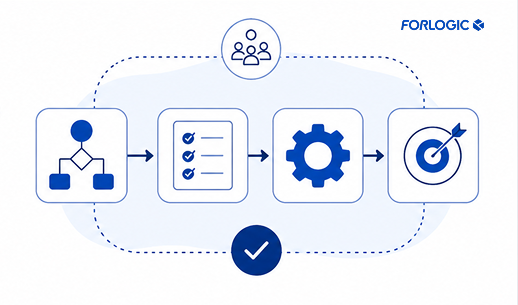
After the diagnosis, the next step is to transform the operation into a structured system, making it clear how the processes work and ensuring that they are carried out consistently.
This begins with mapping the organization’s key processes, identifying inputs, activities, responsible parties, and outputs, as well as the interactions between different departments.
The goal is to move away from a model where each person performs tasks “their own way” toward a standardized model in which workflows are clear, reproducible, and results-oriented.
This involves defining criteria, assigning responsibilities, documenting procedures when necessary, and ensuring that everyone understands how to carry out each step.
More than just documenting, standardizing processes means creating predictability and control over operations, thereby reducing variations, rework, and errors.
Step 3.2 - Risk and Opportunity Management
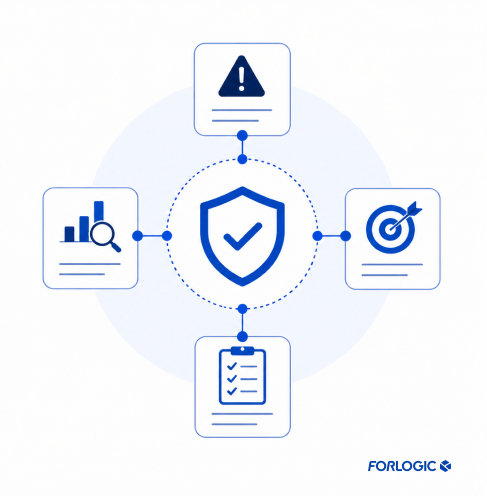
At the same time, the risks and opportunities associated with each process are analyzed, anticipating failures, bottlenecks, and variables that could compromise the results.
Managing risks and opportunities is what shifts a company from a reactive approach to a proactive one.
Instead of acting only when problems arise, the organization begins to identify in advance the factors that could impact its results—both negatively and positively.
This involves identifying risks throughout the processes, assessing their impacts and probabilities, and defining actions to prevent, reduce, or control these risks.
At the same time, the standard also encourages the identification of opportunities—that is, improvements and optimizations that can increase the efficiency, quality, and competitiveness of the operation
Risk management must be integrated into the company’s day-to-day operations and linked to its processes, metrics, and decision-making.
When implemented effectively, it reduces uncertainty, increases predictability, and strengthens the organization’s ability to grow in a controlled manner.
Step 4 - QMS Documentation
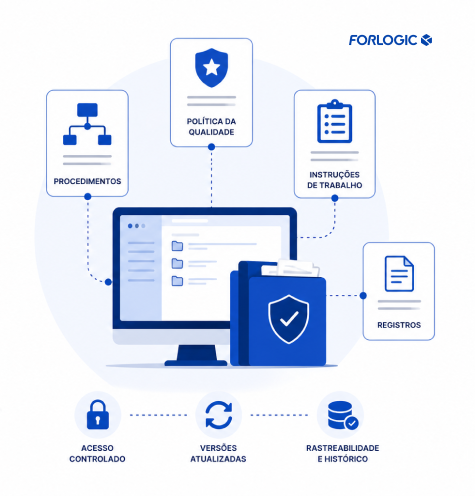
The Quality Management System documentation ensures consistency, traceability, and control over operations.
It is through this policy that the company defines how processes should be carried out, what criteria are used, and how evidence of activities is recorded.
This involves drafting documents such as quality policies, procedures, work instructions, and records, always providing the level of detail necessary to ensure clarity without creating excessive bureaucracy.
The goal is not to document everything, but to document what is critical for the operation to function in a standardized and auditable manner.
In addition to document creation, ISO 9001 certification requires control over this information: ensuring that versions are up to date, that access is appropriate, and that changes are traceable.
When properly structured, documentation ceases to be a static file and becomes an active management tool, supporting the execution of processes, audits, and continuous improvement.
Step 5 - Monitoring and Performance
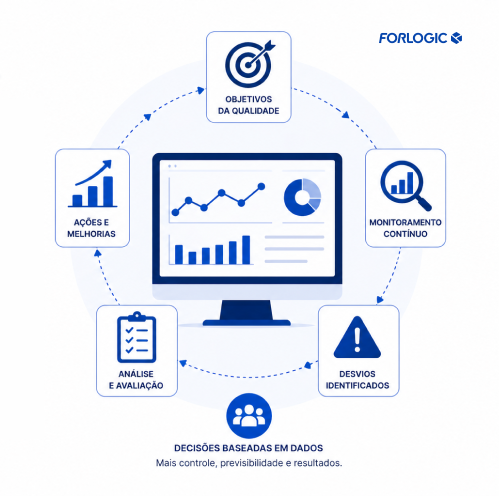
Monitoring ensures that the Quality Management System operates in a controlled and results-oriented manner.
It is through these indicators that a company moves away from operating based on perception and begins to make decisions based on concrete data.
To do this, you need to define relevant metrics for each process, track performance over time, and analyze results to identify deviations, trends, and opportunities for improvement.
The goal here is to provide visibility into operations, understanding what is working, what needs to be adjusted, and where the main risks lie.
In addition, it is essential to establish analysis routines, such as periodic meetings and performance reviews, to turn data into action.
When well-structured, monitoring creates a continuous cycle of learning and evolution, enabling rapid adjustments, greater predictability, and more efficient quality management.
Step 6 - Internal Audit
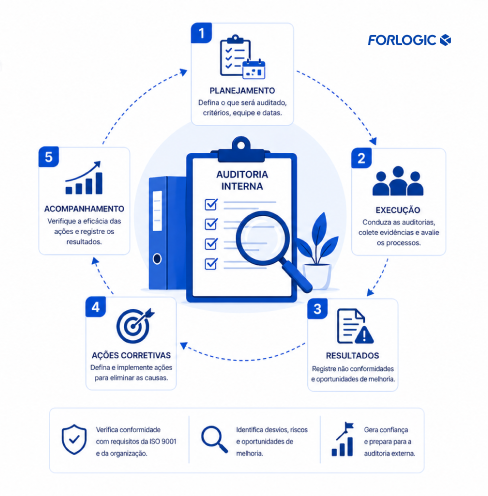
An ISO 9001 internal audit is an opportunity to verify whether the Quality Management System is operating in accordance with the requirements of ISO 9001 certification and, above all, in accordance with the organization’s own policies.
It allows you to identify deviations, inconsistencies, and opportunities for improvement before the external certification audit.
Here, you should schedule periodic audits, define the scope, criteria, and auditors, and conduct structured assessments of the processes.
The goal is not merely to review documents, but to assess whether activities are being carried out as planned and whether controls are effective on a day-to-day basis.
During the audit, evidence is gathered, nonconformities are documented, and opportunities for improvement are identified. These findings must be addressed in a structured manner, with clear action plans and follow-up until resolution.
When conducted properly, internal auditing ceases to be a mere obligation and becomes a strategic management tool, strengthening the system, preparing the company for certification, and driving continuous improvement.
Step 7 - Recording and Handling Nonconformities
Nonconformities are deviations from what was planned, from the requirements of ISO 9001 certification, or from the organization’s own rules.
The purpose of this step is to ensure that problems are addressed at their root cause, preventing recurrence.
We are talking about identifying and recording nonconformities in a standardized manner, analyzing their causes, defining corrective actions, and monitoring their implementation until resolution.
This process must be structured, traceable, and integrated into the management system, ensuring visibility and control.
One of the most important points is to move beyond superficial corrections and advance to root cause analysis, understanding why the problem occurred and what needs to be adjusted in the process to prevent it from recurring.
When well managed, the handling of nonconformities strengthens the system, reduces recurring failures, and directly fuels continuous improvement, making the operation more stable, reliable, and mature.
Step 8 - Certification
Certification is the process by which an independent organization assesses whether your company’s Quality Management System complies with the requirements of ISO 9001 certification.
It is formal confirmation that you have structured your processes, controls, and practices in accordance with the standard. The goal is not merely to verify that everything is documented, but to ensure that the system operates consistently and effectively.
If any nonconformities are identified, you and your team must address them within a specified timeframe in order to proceed with certification. Once approved, you will receive the ISO 9001 certificate, which attests to your compliance and strengthens your credibility in the market.
Certification marks the beginning of a continuous cycle of maintenance and improvement, with periodic audits that ensure the system’s ongoing development. From this point forward, you can ensure that your entire process is subject to continuous improvement, whether it involves supplier management, project management, or strategic decision-making in meetings.
Step 9 - Team Training
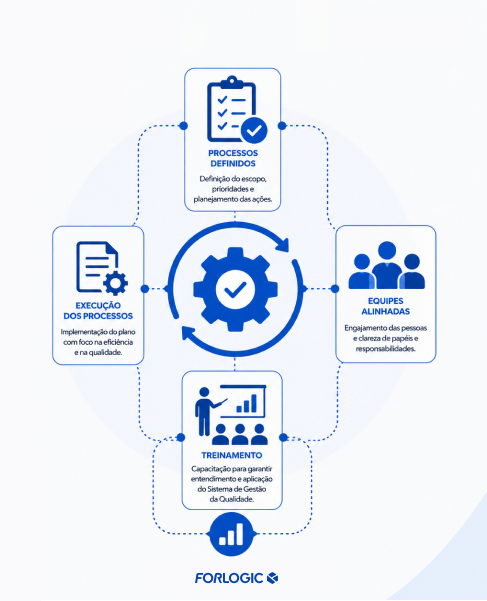
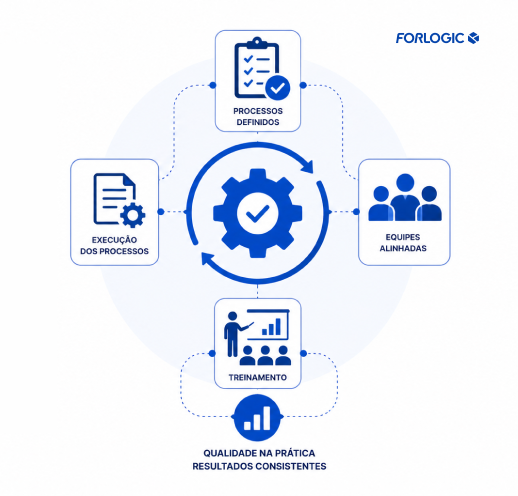
Throughout the process of establishing and certifying the Quality Management System, it is necessary to ensure that it works in practice.
At this point, people play a key role. That is why training teams is essential to ensure understanding, alignment, and engagement.
It is not just a matter of presenting procedures, but of ensuring that every employee understands their role within the system, knows how to perform their duties, and understands the impact of quality on the company’s results.
Effective implementation requires close monitoring, initial adjustments, and verification that the processes are being followed correctly.
When properly implemented, this phase transforms the QMS from a theoretical model into a living, breathing system that is integrated into the company’s daily operations and sustained by the behavior of its teams.
How much does it cost to implement ISO 9001?
The cost of implementing ISO 9001 can vary significantly depending on the size of the company, the complexity of its processes, and the organization’s current level of maturity. Rather than a fixed amount, it is important to understand that this investment is made up of various factors throughout the process.
Implementing the standard involves structuring processes, training teams, organizing documents, monitoring indicators, and undergoing audits, and each of these elements directly impacts the total cost.
Thus, it is impossible to pinpoint an exact figure for the cost of implementing ISO 9001; the best we can do is estimate figures. We can therefore infer that costs may range from R$4,000 to R$50,000 for SMEs and large companies, respectively.
And although this initial investment exists, many companies fail to consider the financial impact of not having a structured system—such as constant rework, recurring failures, loss of productivity, customer dissatisfaction, and difficulty growing.
ISO 9001 Certification Audit: How to Prepare?
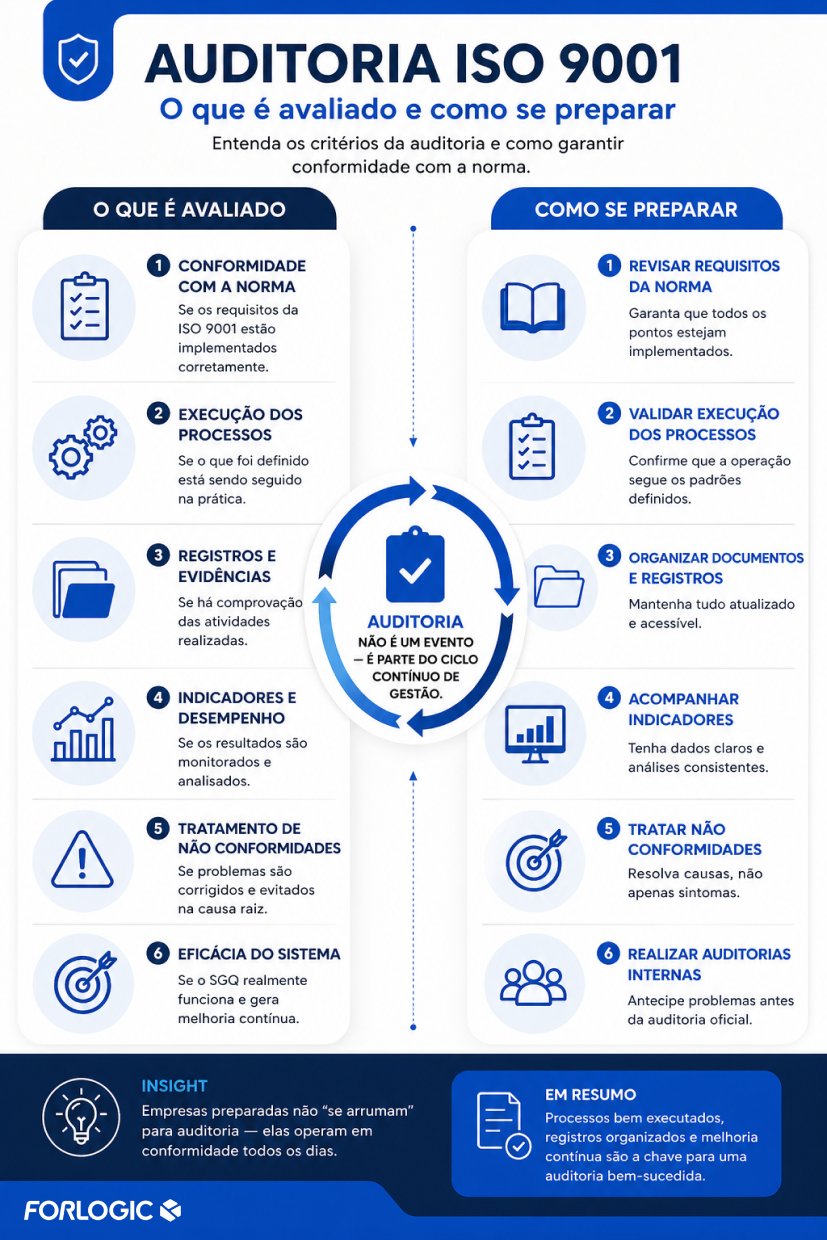
An ISO 9001 audit is the process of assessing whether the Quality Management System (QMS) complies with the standard’s requirements and whether, in practice, processes are being carried out consistently and effectively.
This is not merely a review of documents; the audit examines actual evidence of operations, such as records, metrics, interviews with employees, and the day-to-day execution of processes.
It can occur at various stages of a company’s journey, such as external audits for certification and periodic maintenance and recertification audits.
Companies that view auditing as an integral part of management are constantly evolving and focus on True Quality. Companies that view it merely as an obligation simply “prepare to pass.”
When the Quality Management System is well-structured and integrated into operations, an audit ceases to be a stressful event and becomes a natural validation of the work performed. That is what we advocate here at ForLogic and with Qualiex.
ISO can be used by any company, anywhere in the world. Watch this video to understand that ISO is a means to an end, not the end goal of your company’s QMS.
Which companies can use ISO 9001?
ISO 9001 is a standard applicable to any type of organization, regardless of its size, industry, or operational complexity.
Because it is based on management principles rather than industry-specific rules, it can be adapted to the realities of different businesses, from small companies to large corporations.
The standard does not define what the company does, but rather how it should organize its processes to ensure quality, consistency, and continuous improvement.
Regardless of the industry, the value of ISO 9001 lies in its ability to adapt best management practices to the company’s specific circumstances, creating a structured, auditable system that is designed to evolve alongside the business.
ISO 9001 Course: How to Get Trained to Implement the Standard?
The course "Implementation of ISO 9001 – Quality Management System" provides a practical introduction to ISO 9001, linking each requirement to the day-to-day operations of a QMS.
Throughout the modules, students learn everything from the fundamentals and understanding of the ISO 9000 series to the full implementation of the QMS cycle: context, leadership, planning, support, operation, performance evaluation, and improvement.
If you've made it this far, you already understand that ISO 9001 isn't just a theoretical standard—it requires practical application, organization, and consistency in quality management.
And that is precisely where training makes a difference.

Course on the Implementation of ISO 9001 – Quality Management System, with Rodolfo Paludeto, a quality professional and Director of Saber Gestão, ForLogic’s education division.
ISO 9001:2015 Revision: What Changes Over Time?
ISO 9001 is a living standard that is periodically revised to keep pace with changes in the market, technology, and the way organizations operate.
The version published in 2015 marked a significant step forward by introducing concepts such as risk management, a more structured process-based approach, and greater strategic alignment with the business.
This was not the first update. Over the years, the standard has undergone several revisions, such as ISO 9001:2000 and ISO 9001:2008, which marked the transition from a more document-based model to a more integrated management system focused on processes and continuous improvement.
The rationale behind these revisions is clear: to ensure that ISO 9001 remains relevant and applicable in different organizational contexts, keeping pace with the growing complexity of operations and the need for increasingly data-driven decisions.

In this special episode of Qualicast, Jeison Arenhart —CEO of ForLogic—and Monise Carla—Director of Customer Experience at ForLogic—invite Rogerio Meira of ATSG to discuss the revision of ISO 9001

In this video, you’ll learn: how the ISO 9001 revision cycle works, why trying to predict changes can lead to rework, what you can do right now to prepare, and how to use the revision to strengthen the strategic position of Quality within the company.
ISO 9001:2026: What do we know so far?
The next revision of the standard is already underway and will result in ISO 9001:2026.
As with previous versions, this update is expected to reinforce the standard’s alignment with changes in the business environment, including topics such as digitalization, data-driven management, and new organizational demands.
Although the details of the changes are still being finalized, the revision process already signals the importance of keeping the Quality Management System up-to-date, adaptable, and aligned with the company’s reality.
To prepare, the most important thing is not just to keep up with the changes, but to ensure that the current system is well-structured, with defined processes, clear indicators, and an established culture of continuous improvement.
Quality Tools: Support for Maintaining ISO 9001 Certification
Throughout the implementation of ISO 9001, one thing becomes clear: it is not enough to understand the standard’s requirements; you must have methods to apply them in day-to-day operations. This is where quality tools come in.
They serve as practical support for structuring, analyzing, and improving processes, helping to translate the standard into consistent operations.
From the initial diagnosis to the handling of nonconformities and continuous improvement, these tools support every stage of the Quality Management System (QMS).
These quality tools help identify the causes of problems, organize information, prioritize actions, and make data-driven decisions—exactly the pillars required by ISO 9001.
In this video, Rodolfo Paludeto explains how to choose the right quality tool for each type of problem, avoiding superficial analyses, rework, and poor decisions
What are the main quality tools?
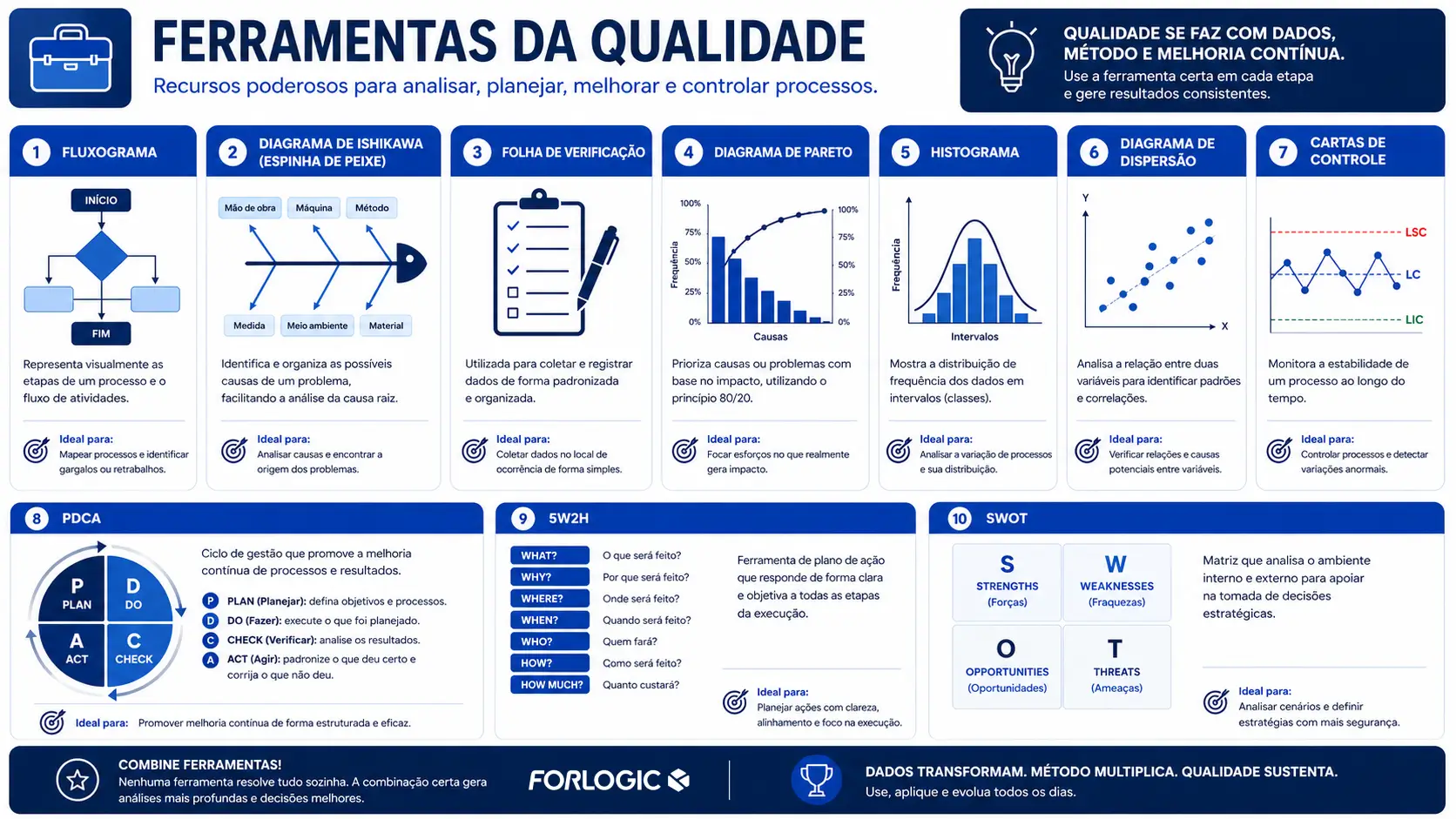
Quality tools are the instruments that make ISO 9001 applicable in day-to-day operations. Each one supports specific stages of implementing and maintaining the Quality Management System, helping to turn analysis into action and problems into improvements.
There are seven classic quality tools: flowchart, Ishikawa diagram, checklist, Pareto chart, histogram, scatter plot, and control charts. In addition to these, we can mention PDCA, 5W2H, 5S, GUT matrix, and SWOT.
ISO 9001 Software: How to Digitize Quality Management?
Implementing ISO 9001 using spreadsheets, emails, and manual controls might work at first, but it quickly becomes complex, difficult to maintain, and prone to errors.
As the Quality Management System evolves, so does the need for control, traceability, and integration between processes.
It is in this context that the use of ISO 9001 software becomes a key differentiator. It centralizes information, automates workflows, and connects all stages of the QMS, from document management to audits, performance metrics, and the handling of nonconformities.
This means moving away from a decentralized, reactive model toward structured management, with real-time visibility, greater control over processes, and a significant reduction in rework.
In addition, software makes it possible to ensure compliance with the standard more efficiently, simplifying audits, standardizing records, and ensuring that information is always up to date and accessible.

Qualiex is the best ISO 9001 software. With it, you can bring agility, traceability, and automation to your QMS. Schedule a demo today!
In this special Quality Week webinar in 2025 , you’ll discover five ways to use artificial intelligence (AI) to support day-to-day quality management.
AI in Quality Management: How Can It Help?
Artificial intelligence (AI) is already changing the way quality is managed in companies—not just as a concept, but in day-to-day operations.
Instead of relying on manual controls, time-consuming analyses, and decisions based on intuition, AI provides agility, precision, and continuous support to those who implement the Quality Management System.
This can translate into less operational effort, greater clarity about what is happening, and a greater ability to act quickly in response to deviations, risks, and opportunities.
The ForLogic Quality Assistant from ForLogic brings these benefits to day-to-day operations, functioning as an AI agent integrated into the Quality Management System. And best of all, it’s free!
It can assist teams in analyzing nonconformities, interpreting data, searching for information, and making decisions, making the QMS smarter, more agile, and better aligned with the company’s reality.
Free resources on ISO 9001 to help you
ForLogic offers a range of free resources for you to use in your company’s day-to-day quality management.





Rodolfo Paludeto
I am the Executive Director of Saber Gestão, part of the ForLogic group . I believe that quality is the key to transforming the world for the better, which is why my goal is to make quality simple and effective for people. I am a specialist in Quality, Excellence, and Management, a Lead Auditor for ISO 9001, ISO 14001, and ISO 45001, and an auditor for ISO 17025. I have over 15 years of experience working to build quality through training, consulting, and mentoring. Follow me on LinkedIn and Instagram.
FAQ - Frequently Asked Questions
ISO 9001 is an international standard that defines the requirements for implementing a Quality Management System (QMS), helping companies standardize processes, ensure consistency in delivery, and promote continuous improvement.
A QMS is the set of processes, policies, procedures, and controls that a company uses to ensure the quality of its products or services. It organizes operations, standardizes activities, and enables the monitoring of results, promoting continuous improvement and greater customer satisfaction.
ISO 9001 is designed to help organize a company’s operations, improve the quality of its products or services, increase customer satisfaction, and ensure more efficient and controlled processes.
The standard is based on seven principles: customer focus, leadership, employee engagement, a process-oriented approach, continuous improvement, evidence-based decision-making, and relationship management.
The requirements of ISO 9001 are organized into topics such as organizational context, leadership, planning, support, operations, performance evaluation, and continuous improvement, forming the foundation of the Quality Management System (QMS).
Among the key benefits are: process standardization, reduced errors, continuous improvement, data-driven decision-making, increased customer satisfaction, and greater market competitiveness.
The implementation involves steps such as initial assessment, process mapping, risk management, system documentation, team training, monitoring of key performance indicators, internal audits, and certification.
The cost varies depending on the size of the company, the complexity of the processes, and the implementation model. It may include consulting, training, audits, and tools, and is an investment that tends to yield returns in terms of efficiency and control.
It is important to streamline processes, organize documents, monitor key performance indicators, train teams, and conduct internal audits to ensure compliance prior to certification.
Any company can obtain ISO 9001 certification, regardless of size or industry, from manufacturing companies to service, technology, healthcare, and construction firms.
The best course is one that combines theory and practice, preparing participants to apply the standard in their day-to-day work. Saber Gestão offers training programs designed for the practical implementation of ISO 9001, with a focus on real-world application.
Good software should centralize processes, documents, audits, and metrics. Qualiex stands out for integrating all stages of the QMS into a single environment, making it easier to implement and maintain ISO 9001 compliance.
No. ISO 9001 is not required by law. However, many companies pursue certification to improve their processes and meet the requirements of customers, markets, or government contracts.
The timeframe varies depending on the company's size and maturity, but it generally takes 3 to 12 months. More organized companies tend to implement it more quickly.
We could say yes, indirectly. Certification boosts a company’s credibility, improves the quality of its deliveries, and can serve as a competitive advantage in negotiations, especially in more demanding markets.
Yes. Even for small businesses, ISO 9001 helps organize processes, reduce errors, and prepare the business to grow with greater control and efficiency.