Home » Gehaka Case
Use Case
How Gehaka Achieved quality management off the page and got the entire company involved
With more than 60 years in the market, this manufacturer of laboratory and agribusiness equipment uses Qualiex to enable any employee—including executives—to log nonconformities, link risks, and approve documents without leaving the digital workflow.
About Gehaka
Precision is the product. Quality couldn't depend on paper.
| Foundation | More than 60 years in business |
| Products | Moisture meters and laboratory equipment |
| Markets | Laboratories and Agribusiness |
| Initial Challenge | Paper-Based Nonconformity Management |
Gehaka manufactures equipment for laboratories and agribusiness, including moisture meters used, for example, to calculate the ratio of grain weight to water in coffee shipments. It is an industry where accuracy is not just a detail—it is the product.
But internal quality management still operated much like it did in much of traditional industry: nonconformity reports on paper, circulating between departments, depending on someone remembering to fill them out, file them, and follow up on the response.
This created an effect familiar to anyone who works in quality assurance: resistance. Filing a nonconformity on paper meant visible bureaucracy—and it was all too visible. Teams avoided documenting what should have been documented.
Gehaka decided to change this by adopting Qualiex, focusing on the Incidents, Documents, Workflows, and Risks modules.
Before
Quality Management on Paper
- Nonconformities recorded on paper forms
- Filing an incident report was seen as red tape, which led to resistance from the team
- Action plans rewritten from scratch for each incident, even recurring ones
- Approval of documents via email, without a unique case reference number
- Risk that the paper will get lost, torn, or simply left blank
With Qualiex
Quality as part of everyone's daily routine
- Any employee, including executives, can report a nonconformity directly in the system
- Standardized action plans for recurring issues, such as returns
- Incidents directly linked to the risks they reveal
- Approval of documents via email, without a unique case reference number
- 100% traceable history, ready for an audit at any time
Today, at Gehaka, anyone can file a nonconformity report. Even the directors receive them and have to respond—all through Qualiex.
How Gehaka Uses Qualiex
Four modules, a single quality stream
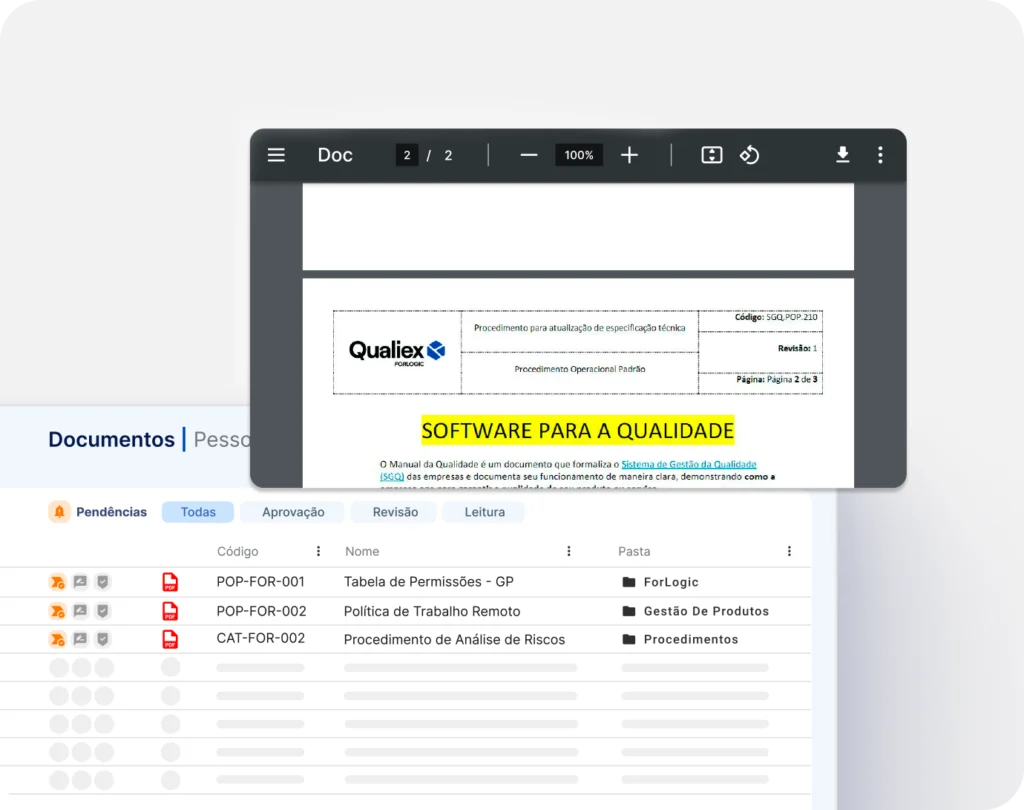
Documents under control, without restricting access
The team controls who sees what; it can make a document available to the entire company or restrict access to a folder for managers, without ever allowing downloads. This eliminates the risk of anyone working with an outdated version.
“The most important thing for me is being able to share documents without letting anyone download them. The collaborator receives the email, and I set how many days they have to read it.”
Over 1,500 active documents under control
The company's most widely used module
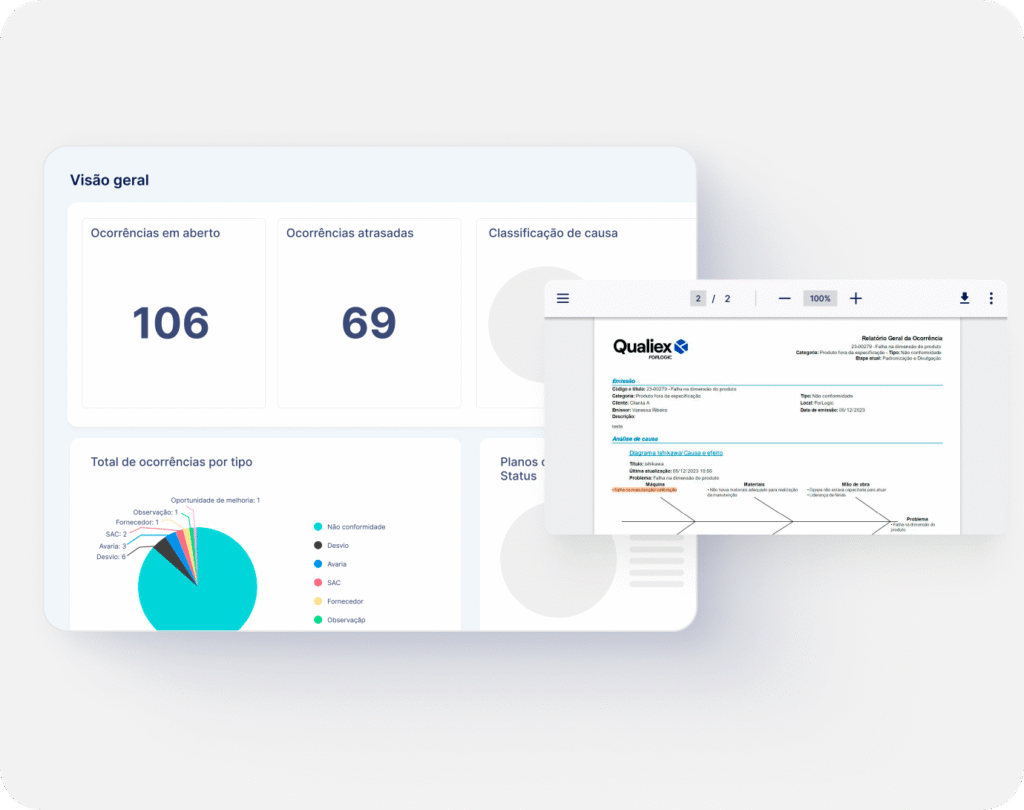
It’s the gateway to quality at Gehaka. Any department can log a nonconformity, attach supporting evidence, and link the record to a previously mapped risk, closing the loop between “what happened” and “what it means.”
“I can attach evidence and link it to a risk, because sometimes a nonconformity keeps recurring and ends up becoming a real risk.”
More than 3,000 incidents reported
Standardized action plans for recurring issues
In 2024, Gehaka began establishing action plan steps for recurring issues, such as returns. Instead of recreating the plan for each new incident, the team applies the already validated template, saving time when the problem is already known.
“If there’s a type of situation that we know will always happen, I set those steps in advance. For me, that was a milestone.”
Standardized corrective actions since 2024
Scaled results
What role does Gehaka 's operation play within Qualiex today?
The figures below illustrate the scale and maturity of current usage, proving that quality is no longer the responsibility of a single department but has become part of the company-wide routine.
Incidents recorded and managed within the system, with traceable action plans
Active documents subject to access control, version control, and read expiration dates
Risks mapped and directly linked to actual operational events
Areas of the company with active, cross-functional quality governance
About these numbers: The data reflects the volume and maturity of Gehaka’s current use of Qualiex, as gathered by the Customer Success team. It demonstrates the scale and actual adoption within the company, not a direct “before and after” comparison.
This whole business of doing quality management on paper—paper gets crumpled, it goes missing. That’s not control. Implementing the Incidents and Docs modules would make a world of difference in any company’s operations.
Your quality management can also move beyond the drawing board
See how Qualiex can reduce resistance to nonconformities at your company
Like Gehaka, your industry can manage incidents, documents, and risks through a single workflow: one that is traceable, auditable, and easy for any employee to use.